

NoodleNudes
Lairian
- Joined
- Dec 11, 2025
- Messages
- 10
- Points
- 4
Hey folks!
I’m Bea, or rather NoodleNudes, and I’m in the process of establishing a 501(c ) ( 3) medical rescue in the Lowcountry of South Carolina where I’ll specialize in ailments like Tritrichomonas Foetus in purebreds, among other good stuff supporting our local shelter, and as I recently (this month) took in two Sphynx from SphynxLair that are positive, I thought I would share an informational post about my experience and knowledge gained since taking in my first Tritrichomonas positive kitty, a Lykoi, in November of 2025.

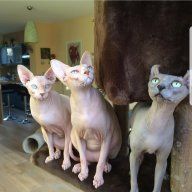
This is Laz!
When we took in Lazarus in November, I had never heard of Tritrichomonas. I’ve been doing feline foster, rescue, and shelter work for years but it had never hit my radar. Laz was emaciated with severe chronic diarrhea and fecal incontinence. Right away, we got a fecal sample sent in for a fecal PCR. Now, this is very different than the in-house fecal floats that most vets do, as fecal floats cannot detect Tritrichomonas. A fecal PCR is required for this, and is sent to a lab like IDEXX for extensive testing.
We got the results the following week and while our first choice for treatment was Ronidazole, the US is currently experiencing a nationwide shortage so we opted to immediately start him on a two week course of Tinidazole.
Tinidazole has a lower effective rate for wiping out Tritritchomonas, even the Ronidazole can take multiple rounds but we were hopeful that we could lower his parasite load enough to allow his body to put on weight and retain it, which we were successful with, with the Tinidazole. Other medications often recommended for this are Secnidazole and Metronidazole.
There are also DIY home remedies that some folks resort to in an effort to manage the symptoms, and a lot of vets and people (myself included) recommend a quality probiotic support, and supplements like Pro-Pectalin Gel or Psyllium Husk to bulk up their stool to help with the fecal incontinence and manage the occurrence of diarrhea.
I took in Nudel in early February after her first mama brought her home from their breeder with symptoms of Tritrichomonas in September of 2025 and after many months of vet visits, an exorbitant amount of money spent, and lots of poop cleanup, they weren’t any closer to an answer—but their vet never did a fecal PCR which is essentially your golden ticket.

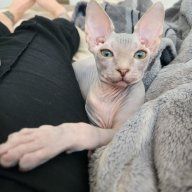
This is Nudel!
So we got Nudel transported from Maryland to South Carolina where she was quickly seen by my vet, we got a stool sample, sent off the fecal PCR and by the next week we had our diagnosis. We were set to order Tinidazole with Ronidazole still on backorder until I got the notification that Bonnie was posted here on SphynxLair.

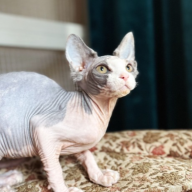
This is Bonnie, we’ve been calling her Bon Bon!
Bonnie was already diagnosed and starting another treatment for Tritrichomonas, she’s been on Tinidazole and Metronidazole, but her former mama was able to get the Ronidazole from an online compounding pharmacy through their vet in New Mexico which she started a week ago. We’re now using this pharmacy to get Ronidazole for Nudel and Lazarus!
After some chatting and getting to know each other, she drove Bonnie from New Mexico to South Carolina, and they arrived this past Sunday. Bonnie has been settling into our home beautifully.
So now we have a Tritrichomonas trio! They live in three separate catios, with their own litter boxes. Tritritchomonas is spread through feces, so when cats in a multi-cat home share a box with a positive cat, and then clean their paws, they ingest the parasite that take up residence in their large intestine and cause the chronic diarrhea that often contains mucous, and blood, causes swelling of the intestinal wall that can be seen on ultrasound, may also cause lymph node enlargement, and fecal incontinence. These tummy troubles can cause food aversions, weight loss, and in extreme cases, emaciation.
It’s very important to sanitize litter boxes daily when you have a Tritritchomonas positive kitty to prevent reoccurrence, and many cats can never be fully “cured” of the parasite as stress can cause a resurgence of symptoms.
It’s very important to regularly test with fecal PCR’s once a kitty tests positive, even if they’ve tested negative after treatment.
We plan to test 3-4 weeks post-treatment, 3 months post-treatment, 6 months, and 1 year, then every 6 months as needed for the rest of their lives (if negative, protocol is different if still positive) and that’s what we’ll recommend to any adopters of babies we’ve had in care who have been Tritrichomonas positive at some point.
I highly recommend that anyone adopting a kitten ask if their kitten or anyone in the cattery has had a recent fecal PCR and what the results are. Ethical catteries will be routinely testing as Tritrichomonas is making its way into many catteries, and if your breeder hasn’t and isn’t willing to (which, red flag ) and that doesn’t spook you off, I would absolutely quarantine them upon arrival at home if you have another cat(s) and make sure to secure insurance, and then get a fecal PCR as soon as your waiting period is over. This will save a lot of money, heartache, and potential spread to the other cats in your home.
Tritrichomonas can be treated & managed, and I definitely don’t know everything about it (yet!) but I have been learning so much and I just want to share it with everyone because it’s one thing to take it on willingly like I do, and another to be expecting a healthy kitten/cat and get saddled with the awful symptoms and constant management and poop that never seems to stop flowing.
If anyone ever want to chat about it, don’t hesitate to reach out. I’m happy to go over symptoms, records, or just listen while you cry about all the poop!
I’m Bea, or rather NoodleNudes, and I’m in the process of establishing a 501(c ) ( 3) medical rescue in the Lowcountry of South Carolina where I’ll specialize in ailments like Tritrichomonas Foetus in purebreds, among other good stuff supporting our local shelter, and as I recently (this month) took in two Sphynx from SphynxLair that are positive, I thought I would share an informational post about my experience and knowledge gained since taking in my first Tritrichomonas positive kitty, a Lykoi, in November of 2025.
This is Laz!
When we took in Lazarus in November, I had never heard of Tritrichomonas. I’ve been doing feline foster, rescue, and shelter work for years but it had never hit my radar. Laz was emaciated with severe chronic diarrhea and fecal incontinence. Right away, we got a fecal sample sent in for a fecal PCR. Now, this is very different than the in-house fecal floats that most vets do, as fecal floats cannot detect Tritrichomonas. A fecal PCR is required for this, and is sent to a lab like IDEXX for extensive testing.
We got the results the following week and while our first choice for treatment was Ronidazole, the US is currently experiencing a nationwide shortage so we opted to immediately start him on a two week course of Tinidazole.
Tinidazole has a lower effective rate for wiping out Tritritchomonas, even the Ronidazole can take multiple rounds but we were hopeful that we could lower his parasite load enough to allow his body to put on weight and retain it, which we were successful with, with the Tinidazole. Other medications often recommended for this are Secnidazole and Metronidazole.
There are also DIY home remedies that some folks resort to in an effort to manage the symptoms, and a lot of vets and people (myself included) recommend a quality probiotic support, and supplements like Pro-Pectalin Gel or Psyllium Husk to bulk up their stool to help with the fecal incontinence and manage the occurrence of diarrhea.
I took in Nudel in early February after her first mama brought her home from their breeder with symptoms of Tritrichomonas in September of 2025 and after many months of vet visits, an exorbitant amount of money spent, and lots of poop cleanup, they weren’t any closer to an answer—but their vet never did a fecal PCR which is essentially your golden ticket.
This is Nudel!
So we got Nudel transported from Maryland to South Carolina where she was quickly seen by my vet, we got a stool sample, sent off the fecal PCR and by the next week we had our diagnosis. We were set to order Tinidazole with Ronidazole still on backorder until I got the notification that Bonnie was posted here on SphynxLair.
This is Bonnie, we’ve been calling her Bon Bon!
Bonnie was already diagnosed and starting another treatment for Tritrichomonas, she’s been on Tinidazole and Metronidazole, but her former mama was able to get the Ronidazole from an online compounding pharmacy through their vet in New Mexico which she started a week ago. We’re now using this pharmacy to get Ronidazole for Nudel and Lazarus!
After some chatting and getting to know each other, she drove Bonnie from New Mexico to South Carolina, and they arrived this past Sunday. Bonnie has been settling into our home beautifully.
So now we have a Tritrichomonas trio! They live in three separate catios, with their own litter boxes. Tritritchomonas is spread through feces, so when cats in a multi-cat home share a box with a positive cat, and then clean their paws, they ingest the parasite that take up residence in their large intestine and cause the chronic diarrhea that often contains mucous, and blood, causes swelling of the intestinal wall that can be seen on ultrasound, may also cause lymph node enlargement, and fecal incontinence. These tummy troubles can cause food aversions, weight loss, and in extreme cases, emaciation.
It’s very important to sanitize litter boxes daily when you have a Tritritchomonas positive kitty to prevent reoccurrence, and many cats can never be fully “cured” of the parasite as stress can cause a resurgence of symptoms.
It’s very important to regularly test with fecal PCR’s once a kitty tests positive, even if they’ve tested negative after treatment.
We plan to test 3-4 weeks post-treatment, 3 months post-treatment, 6 months, and 1 year, then every 6 months as needed for the rest of their lives (if negative, protocol is different if still positive) and that’s what we’ll recommend to any adopters of babies we’ve had in care who have been Tritrichomonas positive at some point.
I highly recommend that anyone adopting a kitten ask if their kitten or anyone in the cattery has had a recent fecal PCR and what the results are. Ethical catteries will be routinely testing as Tritrichomonas is making its way into many catteries, and if your breeder hasn’t and isn’t willing to (which, red flag ) and that doesn’t spook you off, I would absolutely quarantine them upon arrival at home if you have another cat(s) and make sure to secure insurance, and then get a fecal PCR as soon as your waiting period is over. This will save a lot of money, heartache, and potential spread to the other cats in your home.
Tritrichomonas can be treated & managed, and I definitely don’t know everything about it (yet!) but I have been learning so much and I just want to share it with everyone because it’s one thing to take it on willingly like I do, and another to be expecting a healthy kitten/cat and get saddled with the awful symptoms and constant management and poop that never seems to stop flowing.
If anyone ever want to chat about it, don’t hesitate to reach out. I’m happy to go over symptoms, records, or just listen while you cry about all the poop!