


meandmytwo
Lairian
- Joined
- Aug 21, 2016
- Messages
- 228
- Points
- 81
Hi all. This post is super long - what can I say other than I don't like to leave anything out. lol
Photos to follow!
I have made mention of our poopy struggles in other threads here and there but decided to start this one since I now know what the problem has been (or what part of the problem has been anyway) and perhaps help others. Searching here for clostridium, clostridial, and tylosin yields minimal information. And there are just a lot of poop threads with questions in general.
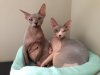
I’ve 2 boys, litter mates, now ten months old.
Freeway has always (almost always) had soft poop but has often suffered from very soft poop, very very soft poop and full on diarrhea. Opposite to that, he has on occasion been constipated for a poop or two, which was odd and something I thought significant to remember at the time - very inconsistent. Because Freeway has the more sensitive tummy of my two, any diet changes, vet visits and medications have been motivated by what’s going on with him. (I’ll include more history in a second post to keep this one more to the point, even though it really is not. LOL)
Frost generally has had normal poops (for a sphynx I guess somewhat soft is within normal levels) - they had been consistent anyway. But then he had diarrhea too (liquid) totally out of the blue for several poops in a row which is what prompted a vet visit the next day… the vet visit which led to finally getting all the fecal tests my vet could offer, that I have listed below. I could no longer dismiss my concerns with “it’s just Freeways sensitive tummy” when Frost got diarrhea too.
(They’ve both also had, from time to time (quite often, actually) poop that the first part comes out firm (perfect in fact) but the latter part is mush, which I started a thread about some months back.)
Fecal Float = $42.00
Giardia/Cryptosporidium = $72.00
Fecal Culture (lab out) = $140.00
I got both of them tested for all the above so the costs were what is listed x 2. My vet did not suggest all at once but instead to go in stages to save money (perhaps something would be found without getting all the tests) but I pushed for them all at once because I was standing there with 2 ziplocks full of brown liquid and hoped to not have to repeat that anytime soon.
What was found was a Clostridial Infection. Freeway had very high levels and Frost had less so but still enough to be concerning.
They were prescribed Tylosin for the infection and B12 shots once a week for 6 weeks. My vet figured they were low on vitamin B12 due to poor absorption because of the on again off again soft poops/diarrhea. They were not tested for B12 levels, but apparently it can’t hurt them to have the shots.
I could put into my own words what I have learned about Clostridium and Tylosin, but I found these articles helpful and concurrent with what my vet told me, so I will link them. But as with anything found on the internet it’s sometimes not entirely accurate.
What a clostridial infection is :
Diarrhea Due to Clostridium perfringens in Cats | petMD
Tylosin :
Tylosin For Pets - Antibiotic Treatment For Diarrhea
That vet visit was about 6 weeks ago. They had 2 weeks of the Tylosin. Within 2 days their poops firmed up. After a few days of being off it though, Freeways diarrhea returned so he went back on the Tylosin for another 2 weeks. We finished up one week ago (Freeways second round of Tylosin and the 6 weeks of B12 shots). Freeway was having decent poos all week until today when he had a real softy. I will update this thread as needed because I’ve been told a Clostridial Infection can be hard to get rid of. I’ll see how it goes for a couple weeks, unless there is full on liquid poo again in which case we will see the vet.
I have learned that an infection with this bacteria (and others) usually results in intermittent very soft poop / diarrhea and many times the infection goes undetected because after a few days when the symptoms clear up the kitty parents dismiss it as a one off. Only to have it return a few weeks later or a month or even months later and the cycle repeats without treatment being sought. I read an article, can’t find it now so did not link it above, that said that the only problem really is the diarrhea because that can interfere with proper nutrition. And that many cats will test positive for clostridium even without symptoms. So, it usually isn’t harmful in itself but can cause long term GI problems, though usually does not.
I am wondering if anyone has experience with this situation and/or Tylosin for long term use. Apparently it can be used long term for different GI ailments including IBD, which my vet suggested Freeway *could* have. It can also be used long term as maintenance to control diarrhea in general when a history of on/off diarrhea has been observed and nothing (diet changes etc.) else has worked.
Tylosin is an antibiotic but works in a way that doesn't affect the good bacteria, if I understand correctly - it doesn’t kill off bacteria at all but instead blocks the replication of the problematic bacteria so that ones own good bacteria is unaffected and can hopefully do it’s good work. It also acts as an anti inflammatory, which is why it is sometimes used for IBD.
Feel free to share any experiences, offer any suggestions, (or correct any of the information I think to be accurate) or just wish me luck!
P.S. I am panning to introduce raw very slowly over the next month to see if that helps. But, we have tried raw before with poor results.
Photos to follow!
I have made mention of our poopy struggles in other threads here and there but decided to start this one since I now know what the problem has been (or what part of the problem has been anyway) and perhaps help others. Searching here for clostridium, clostridial, and tylosin yields minimal information. And there are just a lot of poop threads with questions in general.
I’ve 2 boys, litter mates, now ten months old.
Freeway has always (almost always) had soft poop but has often suffered from very soft poop, very very soft poop and full on diarrhea. Opposite to that, he has on occasion been constipated for a poop or two, which was odd and something I thought significant to remember at the time - very inconsistent. Because Freeway has the more sensitive tummy of my two, any diet changes, vet visits and medications have been motivated by what’s going on with him. (I’ll include more history in a second post to keep this one more to the point, even though it really is not. LOL)
Frost generally has had normal poops (for a sphynx I guess somewhat soft is within normal levels) - they had been consistent anyway. But then he had diarrhea too (liquid) totally out of the blue for several poops in a row which is what prompted a vet visit the next day… the vet visit which led to finally getting all the fecal tests my vet could offer, that I have listed below. I could no longer dismiss my concerns with “it’s just Freeways sensitive tummy” when Frost got diarrhea too.
(They’ve both also had, from time to time (quite often, actually) poop that the first part comes out firm (perfect in fact) but the latter part is mush, which I started a thread about some months back.)
Fecal Float = $42.00
Giardia/Cryptosporidium = $72.00
Fecal Culture (lab out) = $140.00
I got both of them tested for all the above so the costs were what is listed x 2. My vet did not suggest all at once but instead to go in stages to save money (perhaps something would be found without getting all the tests) but I pushed for them all at once because I was standing there with 2 ziplocks full of brown liquid and hoped to not have to repeat that anytime soon.
What was found was a Clostridial Infection. Freeway had very high levels and Frost had less so but still enough to be concerning.
They were prescribed Tylosin for the infection and B12 shots once a week for 6 weeks. My vet figured they were low on vitamin B12 due to poor absorption because of the on again off again soft poops/diarrhea. They were not tested for B12 levels, but apparently it can’t hurt them to have the shots.
I could put into my own words what I have learned about Clostridium and Tylosin, but I found these articles helpful and concurrent with what my vet told me, so I will link them. But as with anything found on the internet it’s sometimes not entirely accurate.
What a clostridial infection is :
Diarrhea Due to Clostridium perfringens in Cats | petMD
Tylosin :
Tylosin For Pets - Antibiotic Treatment For Diarrhea
That vet visit was about 6 weeks ago. They had 2 weeks of the Tylosin. Within 2 days their poops firmed up. After a few days of being off it though, Freeways diarrhea returned so he went back on the Tylosin for another 2 weeks. We finished up one week ago (Freeways second round of Tylosin and the 6 weeks of B12 shots). Freeway was having decent poos all week until today when he had a real softy. I will update this thread as needed because I’ve been told a Clostridial Infection can be hard to get rid of. I’ll see how it goes for a couple weeks, unless there is full on liquid poo again in which case we will see the vet.
I have learned that an infection with this bacteria (and others) usually results in intermittent very soft poop / diarrhea and many times the infection goes undetected because after a few days when the symptoms clear up the kitty parents dismiss it as a one off. Only to have it return a few weeks later or a month or even months later and the cycle repeats without treatment being sought. I read an article, can’t find it now so did not link it above, that said that the only problem really is the diarrhea because that can interfere with proper nutrition. And that many cats will test positive for clostridium even without symptoms. So, it usually isn’t harmful in itself but can cause long term GI problems, though usually does not.
I am wondering if anyone has experience with this situation and/or Tylosin for long term use. Apparently it can be used long term for different GI ailments including IBD, which my vet suggested Freeway *could* have. It can also be used long term as maintenance to control diarrhea in general when a history of on/off diarrhea has been observed and nothing (diet changes etc.) else has worked.
Tylosin is an antibiotic but works in a way that doesn't affect the good bacteria, if I understand correctly - it doesn’t kill off bacteria at all but instead blocks the replication of the problematic bacteria so that ones own good bacteria is unaffected and can hopefully do it’s good work. It also acts as an anti inflammatory, which is why it is sometimes used for IBD.
Feel free to share any experiences, offer any suggestions, (or correct any of the information I think to be accurate) or just wish me luck!
P.S. I am panning to introduce raw very slowly over the next month to see if that helps. But, we have tried raw before with poor results.
Last edited:





 I know the states is different